03 of 15
Gamification to drive behavioral change of frontline workers
*More details of the project can be discussed only in person because of the client confidentiality.
What is behavioral design?
Behavioral design is a problem solving approach that draws on design thinking, psychology, and behavioral economics to influence people’s actions for positive change.
Benefits of behavioral design
By applying the behavioral design principles using the right gamification elements, we could drive the intended behaviour of the users. For an enterprise application the nature of the intended behaviour are related to the performance of the users/employees (e.g. compliance).
Project Overview
A major mining company in South East Asia wanted to do a tech-enabled operational transformation. As part of the various initiatives, they wanted to explore the possibilities of motivating the frontline workers (supervisors) to improve 3 key aspects.
- Safety Compliance
- Operational Efficiency
- Team Performance
The three aspects are tightly coupled with each other. The end users are on average 45–50 years old and not tech-savvy. The users are not motivated as they are settled in their job, and some of them are retiring in the next few years. They have been following a process for many years and are not willing to adopt a new process.
Research Process
Different research methodologies were followed to uncover pain points of the end users and opportunity areas.
- 01 Ethnographic Ride Alongs
- 02 In-depth Interviews
- 03 Focus Group Discussions
- 04 Secondary Research
1. Ethnographic Ride Alongs
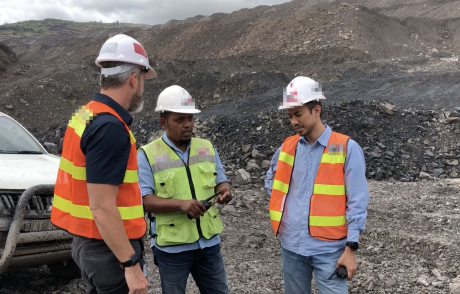
The primary users were the mining supervisors who spend most of their time in the pit (where mining happened). They keep moving between different locations using their vehicle while having constant communication with people from the same or other departments. Riding along with them was quite important to understand their day-to-day work and the problems they face. These ride alongs usually lasted 120 minutes to even half days at a time.
2. In-depth Interviews
In-depth interviews were conducted either during the ride alongs or in the office. 10 to 12 in-depth interviews were conducted with the end users to uncover the way of working and understand the pain points. An interview guide was prepared to conduct the interviews, which helped to make sure that all the areas were covered in the right order.
3. Focus Group Discussions
Multiple stakeholders were invited to participate in focus group discussions. Different groups were formed in such a way that we could gather insights on operations, end users, and business goals. The agenda was prepared in advance to make sure that the discussions were focused.
4. Secondary Research
Desktop research was done to learn about the different gamification methods used by different applications across different industries. This was very helpful in defining the design principles.
Research Outputs
- Current state user journeys with pain points and opportunity areas
- Gamification design principles
Workshops & Ideation
Design thinking workshops and co-creation workshops were conducted to share the findings and come up with initial ideas to solve the problems.
1. Design Thinking Workshops
Multiple design thinking workshops were conducted and different stakeholders participated. Design thinking workshops allowed us to have early alignment on the problem statement and the high-level design directions. Workshops of 2 hours to half day were conducted. The agenda and artefacts required for the workshops were created well in advance.
2. Co-creation Working Sessions
Co-creation working sessions are more detailed working sessions with the working team including product owner, architect, business analysts, and client working team members. These working sessions allowed us to create more detailed paper prototypes and quickly align at the working team level.
Ideation Outputs
- Future state journeys with solutions to the pain points
- High-level key screens which help to visualize the journey better
Design
Ideas were translated to low fidelity and high fidelity screens, journey by journey.
1. Low Fidelity Wireframes
Wireframes were created quickly to get reactions from the stakeholders and the users on the flow and usability.
2. High Fidelity Visual Designs
High fidelity designs were created and used for further testing. Once aligned, these designs were then handed over to the front-end development team.
Testing
Different types of testing were conducted to get reactions from the users and other stakeholders.
1. Concept Testing
Concept testing was important to test some of the gamification principles and methods. The gamification concepts were explained to the users using real-life examples and posters (instead of any screens) to get their reactions on the concept. This testing helped us decide on the type of rewards, leaderboards, and offline activities.
2. Usability Testing
Usability testing was done using low fidelity wireframes as well as high fidelity screens. Prototypes were created using Invision and given to the users to interact with. Users were given certain tasks to complete and were watched while performing them. Based on the feedback, content, typography, hierarchy, and even the flow were redesigned.
The Solution
- A mobile app that complements a main supervisor app — encouraging users to do better in their day-to-day work
- Simple and engaging learning experience where the user can learn a little every day
- Encouraging compliance like timely checklists and other activities by giving instantaneous rewards
- Encouraging both individual performance and team performance so that the overall productivity is increased
Outcome and Impact
90%+ daily engagement: The learning feature of the app had very high engagement where more than 90% of the users used the feature on a daily basis.
Compliance improvement: Visible improvement in compliance, especially filling the checklists both accurately and on time.
Productivity awareness: Users became more aware of their individual productivity as well as the overall team productivity.
Cultural shift: The app enabled more conversations regarding performance during free time.